
There are many reasons to study medicine today. One of the most important is that the field of medicine is constantly evolving. With new technologies and treatments being developed every day, doctors need to constantly learn to provide the best care possible for their patients. This article will discuss five reasons why studying medicine today is a great choice! Also, you can find more news about this topic by clicking here.
Healthcare Professionals Are Respected Citizens
 It doesn’t matter where you live; you are respected if you are a healthcare professional. People trust doctors and other medical professionals to care for them when they are sick or injured. This trust is hard-earned, and it should be taken seriously. Remember that it comes with great sacrifice and responsibility, but the satisfaction you will get from helping others is worth it.
Healthcare Professionals Make a Difference in the Lives of Others
One of the most rewarding aspects of being a healthcare professional is knowing that you are helping others. When you help someone, they often remember it for the rest of their lives. It feels good to know that you have made a difference in other people’s lives, and almost every day, healthcare professionals have the opportunity to do just that.
You Will Never Be Bored as a Healthcare Professional
The field of medicine is constantly changing, which means that there is always something new to learn. As a healthcare professional, you will never be bored because there will always be new challenges to face. You will never stop learning, and that is one of the most exciting things about this career. So, job security and rolling with be guaranteed.
There is a Great Demand for Healthcare Professionals
With the world’s population continuing to grow, there is an increasing demand for healthcare professionals. This means that there are plenty of job opportunities available, and you can be sure that you will always be in demand. Now with the coronavirus pandemic running rampant in today’s world, healthcare professionals are needed more than ever before.
Healthcare Professionals Earn a Good Salary
 While money is not the only reason to become a healthcare professional, it is certainly a perk. Doctors and other medical professionals earn a good salary, and they often have excellent job security. This means that you can be sure that you will always be able to support yourself and your family. So, there you have it! These are five of the many reasons why you should consider studying medicine today.
It is a great time to enter this field with so many opportunities available. So, what are you waiting for? Start your journey today. Did this article convince you that studying medicine is a great choice? Let us know in the comments below.…

 Dr. Blundell went on to perform more transfusions and also develop better tools for the procedure. The first whole-body transfusion was performed in 1840, but even then many people died because the composition of the blood was not understood. Transfusions were therefore safer, but they had to be done with blood flowing directly from the donor to the recipient.
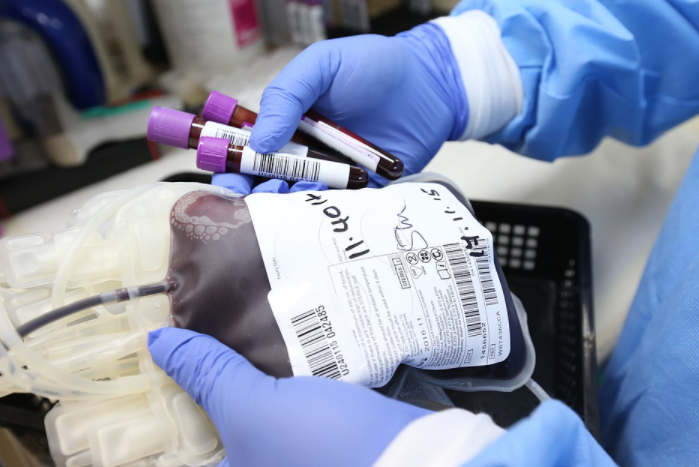
 Once the blood has completely left the donor’s body, it is labeled, stored, and eventually transported. The tubes are then sent to a laboratory for testing. The blood is sorted and if found to be free of disease, stored in large refrigerated containers. Platelets, on the other hand, can simply be stored at room temperature and must be used within 5 days. Then, if necessary, the blood is taken to a hospital. From there, it is made available to a recipient with a compatible blood type.